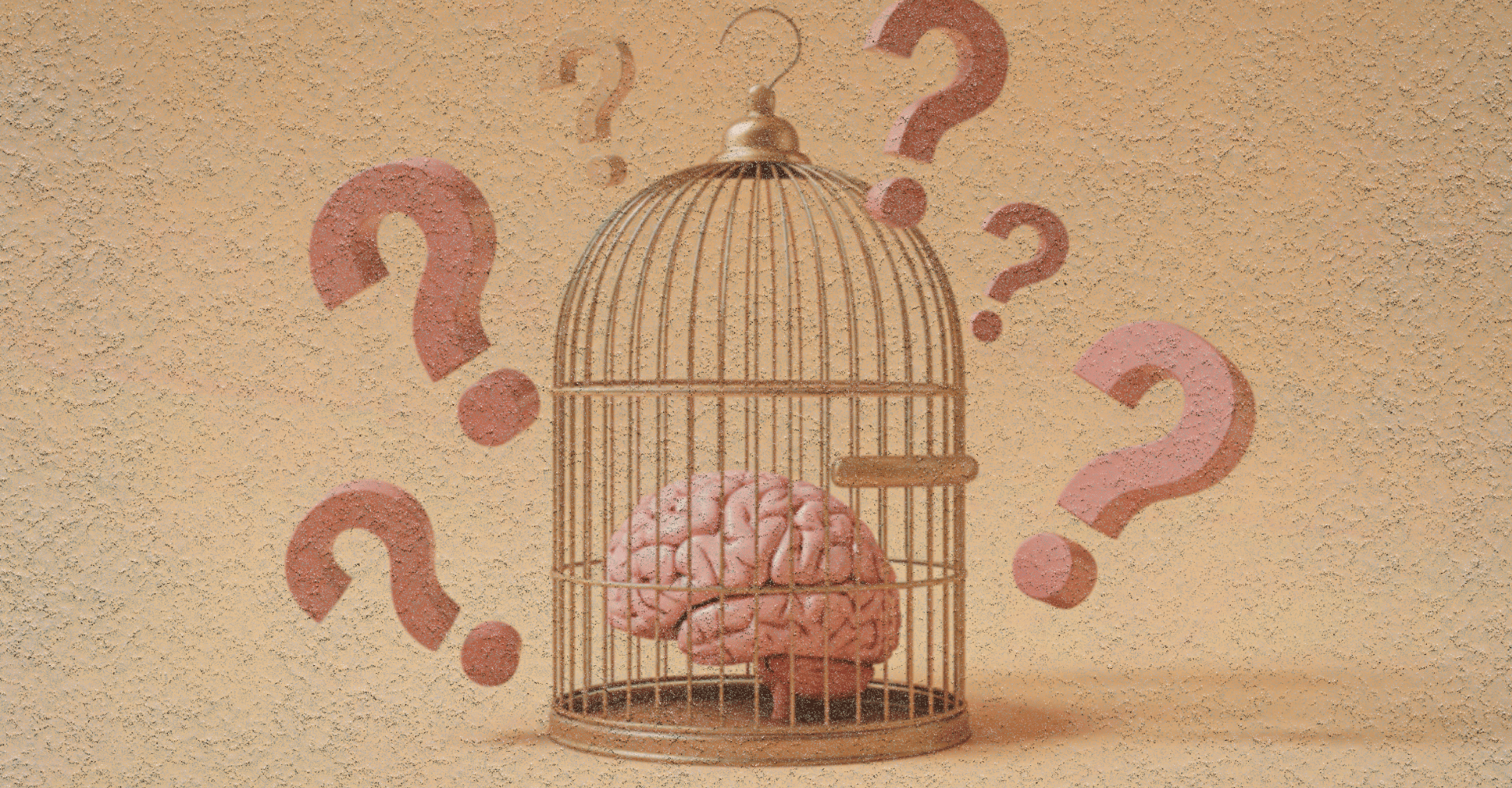
Why the 'Trauma Stored in the Body' Model Fails Under Scientific Review.
For a decade, the dominant model of trauma treatment has been built on a single premise: that traumatic experience is stored in the body and must be released. New neuroscience says that model is wrong — and that the path to recovery looks very different.
The idea that trauma lives in your muscles, fascia, and nervous system — waiting to be found and released through bodywork or somatic therapy — became one of the most influential frameworks in mental health. It shaped clinical practice, residential mental health treatment, and the way millions of people understand their own suffering.
A 2026 paper in Frontiers in Systems Neuroscience, co-authored by Karl Friston — one of the most cited neuroscientists in the world — makes the case clearly: the body does not store trauma. The brain generates it. And the mechanism is not storage. It is prediction.
KEY POINTS
- Your body may not be “storing” trauma. Your brain may be repeating a threat prediction.
- The brain creates the alarm, then treats the body’s reaction as proof the danger is still real.
- Most people exposed to trauma recover because the brain updates over time.
- Recovery is not passive. The brain changes through challenge, movement, structure, and engagement
What actually happens in the brain?
Why people experience trauma as "being in the body"
None of this means trauma isn't experienced physically. It absolutely is. People can feel a racing heart, tight chest, nausea, muscle tension, chronic pain, dizziness or overwhelming exhaustion. Those symptoms are real, often distressing, and deserve to be taken seriously.
The question is not whether the body is involved, but where those sensations originate.
According to the predictive processing framework described by Friston and colleagues (2026), the brain continuously generates predictions about both the external world and the internal state of the body. When those predictions are dominated by threat, the brain prepares the body for danger before any conscious awareness occurs. Increased heart rate, muscle tension and hypervigilance are not evidence that trauma has been stored in tissue. They are the brain's best prediction that action is required.
This distinction matters because it changes the focus of treatment. If the body is viewed as the storage site of trauma, therapy becomes a search for something hidden that must be released. If the brain is understood as generating ongoing threat predictions, treatment shifts towards helping those predictions update through new experiences, learning and behaviour.
The brain constantly predicts what comes next. After trauma, it updates that model: the world is dangerous. In a healthy recovery, the model recalibrates once the threat has passed.
In chronic trauma, that recalibration fails. The brain keeps predicting threat. It generates the physiological response — racing heart, hypervigilance, flooding adrenaline — then reads those body signals as confirmation that the danger is real. The body isn't storing the trauma. The brain is producing it, on a loop, in response to a prediction it can't update.
The authors describe this as a loss of metastability — the brain's capacity to move fluidly between states. Trauma doesn't bury something. It freezes the system.
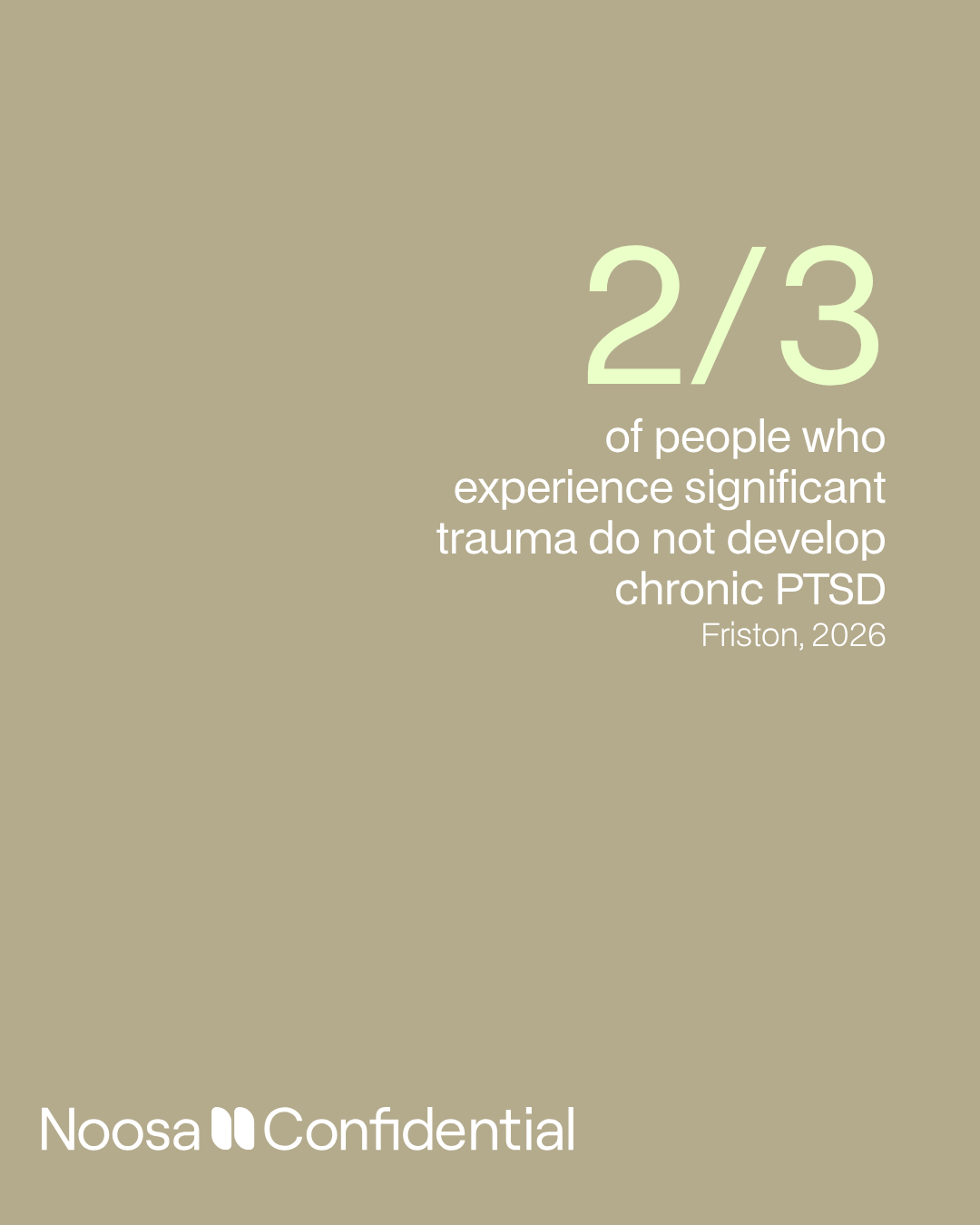
Two-thirds of trauma survivors recover. Here's what that tells us.
Why this matters beyond theory
At first glance, this may sound like an academic debate between competing models of trauma. It isn't. The explanation we give people fundamentally shapes what they believe recovery requires.
If someone believes they are carrying trauma that has become physically trapped inside their body, it's understandable that they begin searching for the right therapist, technique or intervention to finally release it. Recovery becomes something that happens to them.
But if trauma is understood as a prediction problem rather than a storage problem, the picture changes. The brain is not permanently damaged or holding onto an invisible injury. It is doing exactly what brains evolved to do: trying to protect us based on its best available model of the world. The encouraging implication is that models can change. Through repeated experiences of challenge, competence, safety and engagement, the brain receives new evidence that allows those predictions to become more accurate and more flexible.
Across 54 studies reviewed in the paper, approximately two-thirds of people who experience significant trauma do not develop chronic PTSD. They recover — without specialised somatic intervention, without releasing anything from tissue.
Their brains updated. They encountered enough safety, challenge, and engagement that the prediction loop broke and the system regained flexibility. If trauma were truly inscribed in the body, spontaneous recovery at this scale would be almost impossible to explain.
The storage model cannot account for what the data shows.
The prediction model can.
How this changes trauma treatment?
When people are told their trauma is buried in their body, they learn to be passive — waiting for the right technique to unlock them. They measure progress as release. They can spend years in inpatient depression treatment or residential mental health programmes without building the one thing recovery actually requires: the capacity to move forward.
Co-author Michael Mannino put it directly: "If trauma is understood as a disorder of prediction, then we have more actionable targets."
Actionable. That word is doing significant work. Because passivity is not neutral in recovery. A programme that keeps someone still and processing is not automatically helping them heal.
Recovery requires a brain that learns to move again.
What restores metastability?
What allows the brain's threat prediction to update?
Engagement.
Challenge and experiences through intellectual engagement and movement that demands something real of the nervous system.
At Noosa Confidential, all our programs work on rebuilding capacity.
We do not ask people to go inward and wait. We build the conditions for the brain to update: structured challenge, clinical rigour, and accountability.
Find out more
Reference:
Kotler S, Mannino M, Fox G and Friston K (2026). The body does not keep the score: trauma, predictive coding, and the restoration of metastability. Frontiers in Systems Neuroscience, 20:1812957. doi: 10.3389/fnsys.2026.1812957