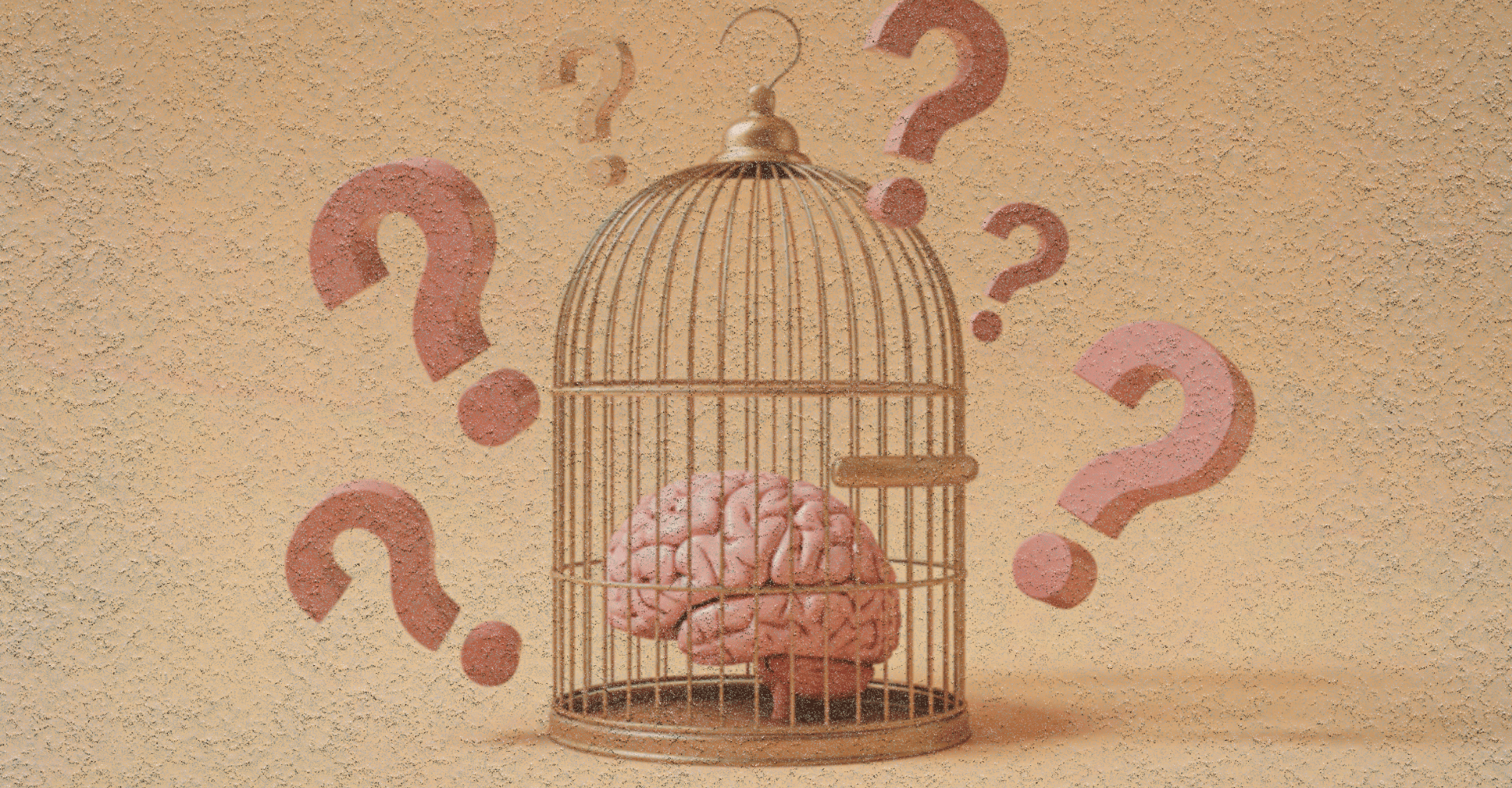
.png)
Key Points
- Functional Neurological Disorder (FND) is a genuine disorder of brain function—not structural brain damage.
- Normal MRI and CT scans do not mean symptoms are imagined.
- Modern neuroscience suggests FND arises from disrupted brain predictions rather than damaged nerves.
- Multidisciplinary rehabilitation is considered best-practice treatment.
- Exercise physiology can play an important role in restoring movement, confidence and physical capacity.
- Earlier rehabilitation is associated with better outcomes.
What Do I Do Now?
For many people, receiving a diagnosis of Functional Neurological Disorder (FND) is both a relief and the beginning of a new kind of uncertainty.
After months—or sometimes years—of scans, specialist appointments and testing, they finally have an explanation for symptoms that may have been dismissed, misunderstood or simply difficult to explain.
Then comes the obvious question:
"What do I do now?"
This is one of the biggest gaps in FND care today.
Neurologists play an essential role in diagnosing Functional Neurological Disorder and ruling out structural neurological diseases such as multiple sclerosis, Parkinson's disease or stroke. But many people leave that appointment with little understanding of what recovery looks like—or whether recovery is even possible.
The good news is that our understanding of FND has changed dramatically over the past decade. Rather than viewing it as a mysterious condition or one that simply requires reassurance, modern neuroscience increasingly points towards something far more practical: the brain can learn, adapt and recover. Rehabilitation is now recognised as one of the cornerstones of treatment (Nicholson et al., 2025).
What is Functional Neurological Disorder?
Functional Neurological Disorder affects the way the brain controls movement, sensation and other neurological functions.
People may experience symptoms such as:
- limb weakness
- tremors
- walking difficulties
- functional seizures
- dizziness
- speech problems
- sensory changes
- fatigue
These symptoms are often severe enough to interfere with work, driving, relationships and everyday life.
What makes FND different from conditions like stroke or multiple sclerosis is that there is no structural damage causing the symptoms.
The nervous system is intact.
The problem lies in how it is functioning.
Why are the symptoms real if scans are normal?
This is perhaps the biggest misconception surrounding FND.
Many people hear that their MRI or CT scan is "normal" and mistakenly assume that means nothing is wrong. Nothing could be further from the truth.
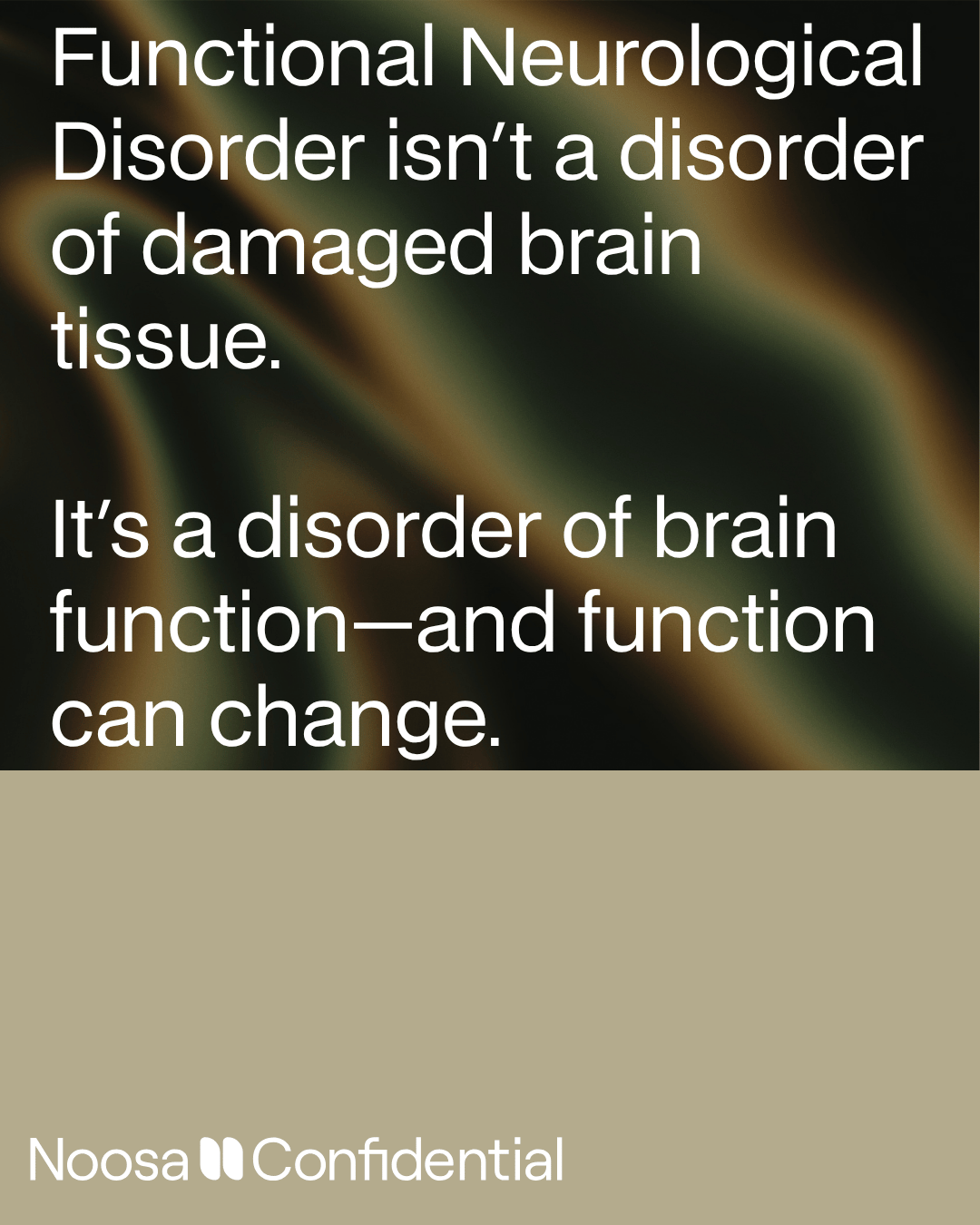
Modern imaging is exceptionally good at identifying structural disease—bleeding, tumours, inflammation or degeneration—but FND is not a disorder of damaged tissue. It is a disorder of brain function.
As Australian consensus guidelines explain, FND is "a disorder of nervous system functioning rather than structure," meaning symptoms arise from changes in how brain networks operate rather than visible injury (Nicholson et al., 2025).
Weakness is real.
Tremor is real.
Seizures are real.
Difficulty walking is real.
The symptoms are genuine. The absence of structural damage does not make them any less so.
A new way of understanding FND
For decades, researchers searched for damage in the brain that could explain Functional Neurological Disorder.
Increasingly, the evidence suggests they were asking the wrong question.
Rather than asking "Where is the damage?" neuroscientists are now asking "How is the brain generating these symptoms?"
One of the most influential ideas emerging from contemporary neuroscience is predictive processing—the concept that the brain is constantly generating predictions about the body and the world, then comparing those predictions with incoming sensory information.
Most of the time, this process is remarkably efficient. The brain continually updates its internal model as new evidence becomes available, allowing us to move, think and respond flexibly to our environment.
In Functional Neurological Disorder, that updating process appears to become less flexible. Rather than easily revising its expectations, the brain can place greater weight on prior predictions than on incoming sensory information. In other words, it continues acting on what it expects to happen, even when new evidence suggests otherwise (Edwards et al., 2025).
These predictions are not deliberate, imagined or "wrong". They are the brain's best attempt to make sense of the information available to it. The symptoms that emerge—whether weakness, tremor, altered sensation or seizures—are therefore genuine neurological experiences, generated by the brain's predictive processes rather than by structural damage.
In other words, the symptoms aren't imagined.
They're generated.
Understanding this distinction fundamentally changes how we think about recovery.
If the problem were structural damage, treatment would focus on repairing injured tissue. But if the problem is a brain that has become overly committed to certain predictions, then recovery becomes a process of providing new evidence—through movement, rehabilitation, meaningful activity and repeated successful experiences—that allows those predictions to become more flexible over time.
The aim is not to convince the brain that symptoms aren't real. The aim is to give the brain enough new information that it no longer needs to generate them.
Why rehabilitation works
One of the biggest misconceptions about FND is that treatment simply involves reassuring people that nothing serious has been found.
Reassurance alone rarely restores function. Current evidence instead supports active, multidisciplinary rehabilitation.
Australian consensus recommendations describe rehabilitation as the cornerstone of treatment, bringing together neurology, psychology, physiotherapy, occupational therapy and exercise physiology to help people regain function (Nicholson et al., 2025).
This approach reflects something fundamental about the brain:
The brain learns through experience.
Avoiding movement because of symptoms often reduces confidence, increases fear and leads to physical deconditioning. Over time, these changes can reinforce the brain's expectations about what the body can—and cannot—do. Rehabilitation works because it provides the brain with new experiences that it cannot ignore.
Every successful movement, every increase in physical capacity and every return to meaningful activity gives the brain fresh evidence about what the body is capable of. Over time, these repeated experiences help the brain refine its internal model, making its predictions more flexible and better matched to the present rather than the past.
As neurologist Professor Glenn Nielsen explains, the goal of rehabilitation is "to retrain normal movement" (Nielsen et al., 2015).
Where exercise physiology fits in
Exercise physiology is often overlooked in conversations about FND, yet it addresses many of the factors that commonly accompany the condition.
People living with FND frequently experience:
- reduced physical conditioning
- muscle weakness
- fatigue
- fear of movement
- reduced confidence
- withdrawal from work, recreation and daily life
A structured, graded exercise programme is not about pushing through symptoms or ignoring them. It's about rebuilding physical capacity while helping the nervous system experience successful, confident movement again.
There are strong parallels with contemporary pain science, where changing beliefs, reducing fear, restoring movement and gradually increasing function have been shown to improve long-term outcomes. In both conditions, recovery is less about waiting for symptoms to disappear and more about helping the brain learn that movement is safe, effective and achievable.
Why early rehabilitation matters
Like any learning system, the brain becomes more efficient at repeating patterns that are practised. When symptoms lead someone to stop moving altogether, those movement patterns—and the beliefs surrounding them—can become increasingly established.
Fortunately, the opposite is also true.
Every successful experience of movement gives the brain an opportunity to update its predictions. This is why rehabilitation is most effective when people engage with it early rather than waiting for symptoms to resolve on their own. Recovery is rarely linear.
But recovery is possible.
What treatment at Noosa Confidential looks like
At Noosa Confidential, we don't define recovery by the absence of symptoms. We define it by the restoration of function.
Our approach to Functional Neurological Disorder is built around one central goal: rebuilding capacity.
Capacity to move with confidence.
Capacity to tolerate physical and cognitive demands.
Capacity to return to work, relationships and the activities that give life meaning.
Through a multidisciplinary approach that combines clinical psychology, exercise physiology and evidence-based rehabilitation, we help people gradually rebuild these capacities in a structured and measurable way.
Why? Because the brain updates through experience.
Every successful movement, every challenge overcome and every meaningful activity completed provides new evidence that helps the brain refine its predictions. Over time, this creates the conditions for greater flexibility, improved function and increased independence. We don't simply treat symptoms. We help people build the capacity to live well despite them—and, in many cases, to move beyond them.
The verdict
A diagnosis of Functional Neurological Disorder isn't the end of the journey.
For many people, it's the point where rehabilitation can finally begin.
The symptoms are real.
The science is evolving.
And while there is still much to learn about FND, one message is becoming increasingly clear: the brain is remarkably adaptable.
With the right support, structured rehabilitation and a focus on rebuilding capacity, many people with Functional Neurological Disorder can regain function, confidence and independence. Recovery isn't about waiting for the brain to change. It's about giving the brain repeated opportunities to learn that more is possible.
References
- Edwards, M. J., et al. (2025). Pathophysiology of Functional Neurological Disorder for the General Neurologist. BMJ Neurology Open, 7(2), e001309.
- Nicholson, T. R., et al. (2025). Managing Functional Neurological Disorder: Treatment Recommendations for Health Professionals in Australia. BMJ Neurology Open, 7(1), e000970.
- Nielsen, G., et al. (2015). Physiotherapy for Functional Motor Disorders: A Consensus Recommendation. Journal of Neurology, Neurosurgery & Psychiatry, 86(10), 1113–1119.
- Nielsen, G., et al. (2024). Specialist Physiotherapy for Functional Motor Disorder (Physio4FMD): A Multicentre Randomised Controlled Trial. The Lancet Neurology.